Saving Wales’s upland Water Voles

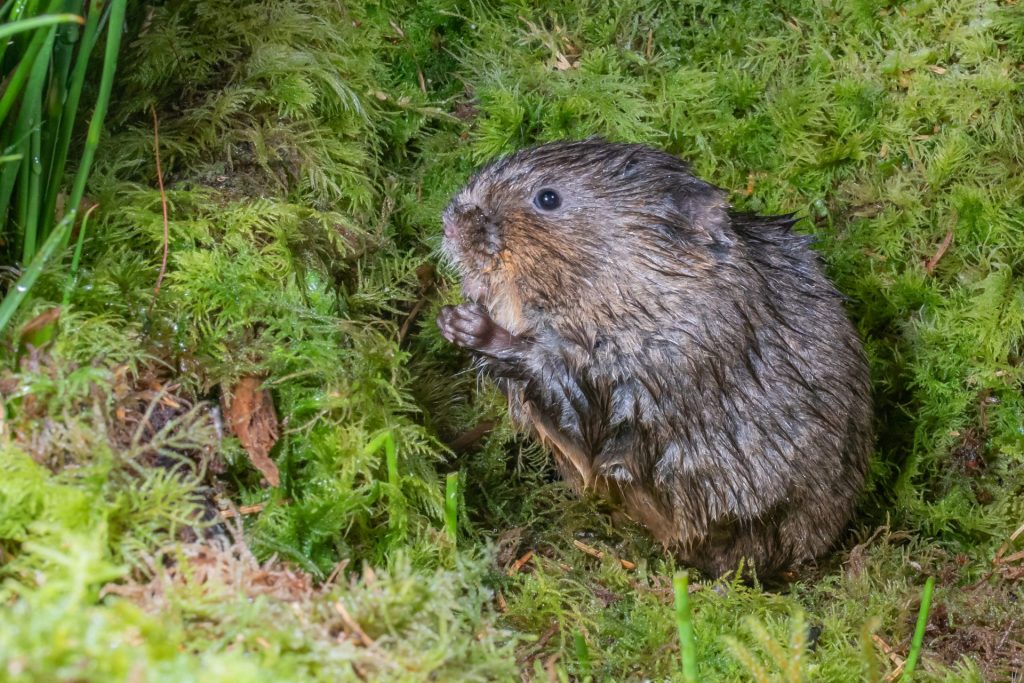
Water Vole

INCC and partners are aiming to save a population of one of the UK’s rarest and fastest declining mammal species, the Water Vole (Arvicola amphibius).

“We have lost so many of our Water Voles in Wales over the past fifty years or so. If we don’t do something urgently, we may end up losing this wonderful animal for good. Projects like this, that bring together conservationists, universities and local communities give us hope that we can save the Water Vole and lots of other species and their habitats as well”.

Iolo Williams
T.V. Broadcaster and Naturalist


Keep up to date with project news


Water Voles are thought to have declined by over 90% in recent years due to a combination of habitat loss and predation by non-native American Mink (Neovison vison) and are now classed as ‘endangered’ in the UK.

Changes in our understanding of Water Vole habitat

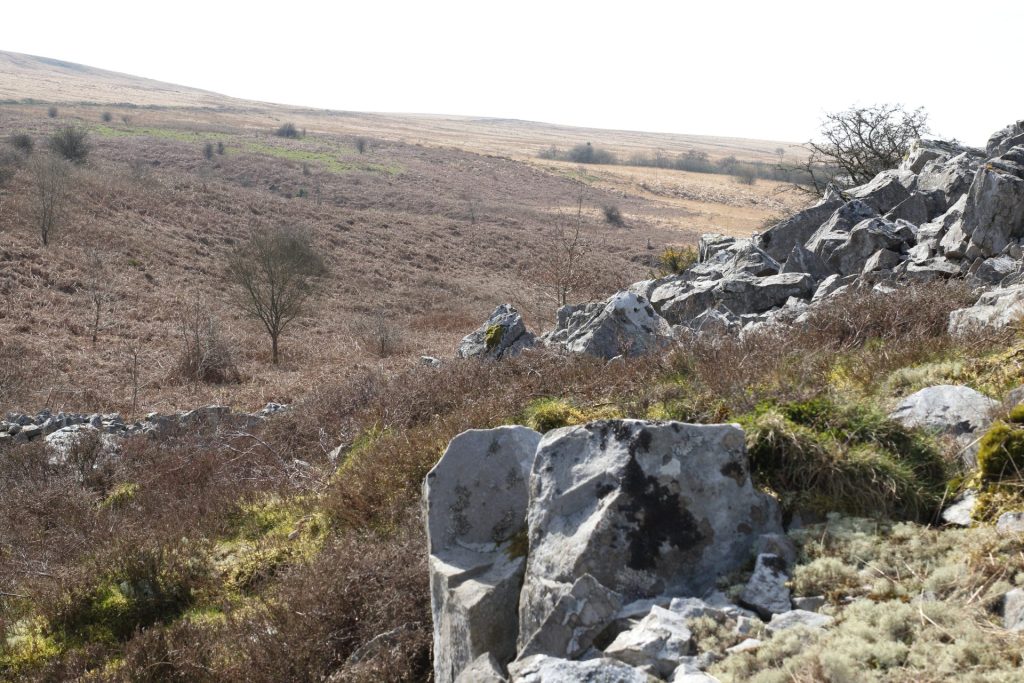
Upland habitats may provide a refuge for Water Voles where Mink are much less commonly seen.

Mink investigating the ‘tunnel cam’

Until relatively recently it was thought that upland habitats were unsuitable for Water Voles and as a result little survey effort has gone into those habitats. Since then, Water Voles have been found in upland habitats scattered across Wales but their ecology here is still little understood.

It is possible that the population around Pen y Cymoedd and the Rhondda Cynon Taff/Neath Port Talbot uplands is significant on a UK scale, so a deeper understanding of their population dynamics is key to helping reverse their decline.

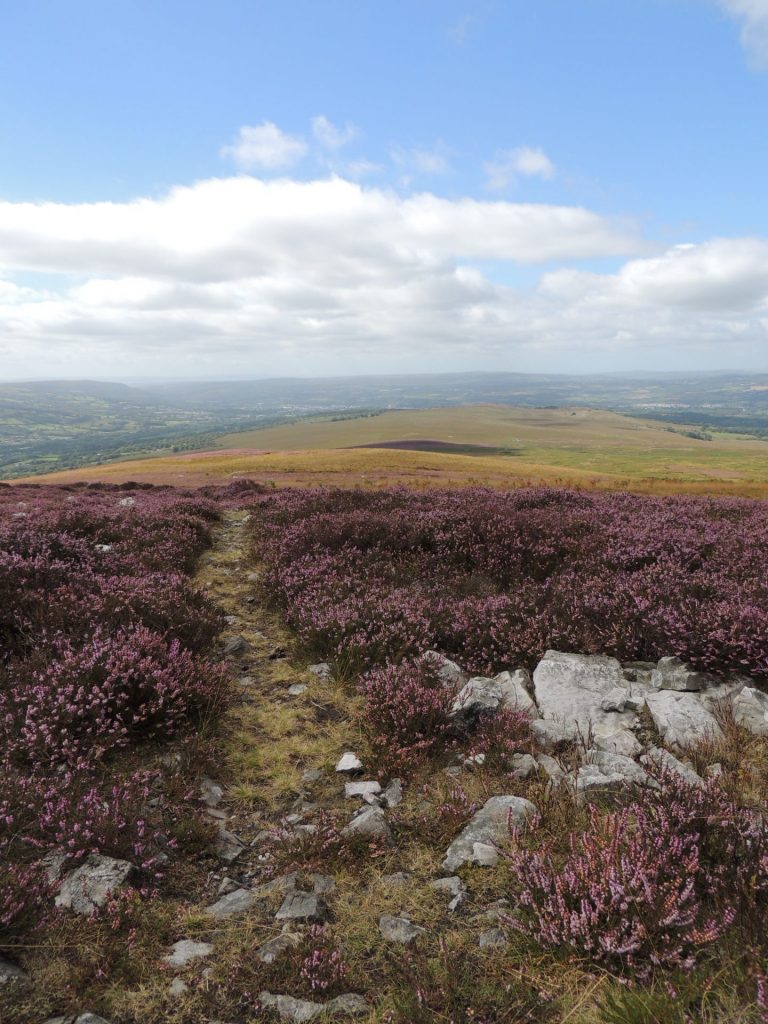
Upland Water Vole habitat

Innovative Water Vole research

INCC’s upland Water Vole project, funded by the Pen Y Cymoedd Wind Farm Community Fund, will undertake vital and innovative research to further our understanding of how to help Water Voles in upland landscapes.

Importantly, the project will ensure that local people and communities are at the heart of delivering conservation action and that local volunteers will have the knowledge and resources to become the water vole’s strongest champions in future.

The project has three overarching objectives.

Obj 1: Prevent the local extinction of Water Vole populations in and around the upland landscape of Pen y Cymoedd.

This will be achieved by undertaking detailed habitat and species surveys, innovative research, community engagement, advocacy and guidance for land managers.

A characteristic Water Vole latrine

Typical feeding remains left by Water Voles

Obj 2: Engage with local communities, groups, schools and individuals so that people of all ages can be inspired by Water Voles and the wildlife they share their landscape with.

Informing and involving local people so that they can have direct involvement in Water Vole conservation measures now and into the future.

Looking for Water Vole field signs

Obj 3: Create a Wales-wide approach to upland Water Vole conservation in Wales, based on the scientific evidence and information gained through the project.

Innovative techniques and modelling used during the project will be used to inform environmental decision makers how best to conserve Water Vole populations across Wales and what needs to be done.

Organisations such as Natural Resources Wales, Wildlife Trusts, Lost Peatlands Project and Local Authorities can all benefit from the project’s findings.

A ‘tunnel cam’, an innovative method for looking for Water Voles

Local people are key

Local people and communities will be involved in all aspects of the project, from research, mapping and surveys, to practical habitat management and restoration.

The project will raise awareness of the Water Vole locally through volunteering opportunities and engagement initiatives.

Importantly, the project will celebrate just how important the local landscape is for this incredibly rare mammal and the role that local people and communities have played in safeguarding the species and contributing to its long-term survival.

Peatland restoration work in the uplands

Understanding how Water Voles use the landscape

The project will support INCC officers, volunteers and students at Aberystwyth University to undertake genetic analysis of known and newly found Water Vole colonies in the upland landscape of the project area.

Water Vole droppings being collected for DNA analysis

This innovative research will reveal just how connected the colonies are and ascertain the level of genetic mixing. This would indicate whether Water Voles are moving across the landscape.

If the results show there is poor connectivity between colonies, then that evidence will help guide future habitat management/creation to help improve connectivity.

As part of the project INCC employed 2 new members of staff tasked with surveying, mapping and planning community events. Eliza and Richard have been instrumental in finding many new Water Vole populations across the project area, contributing greatly to our knowledge of upland Water Voles.
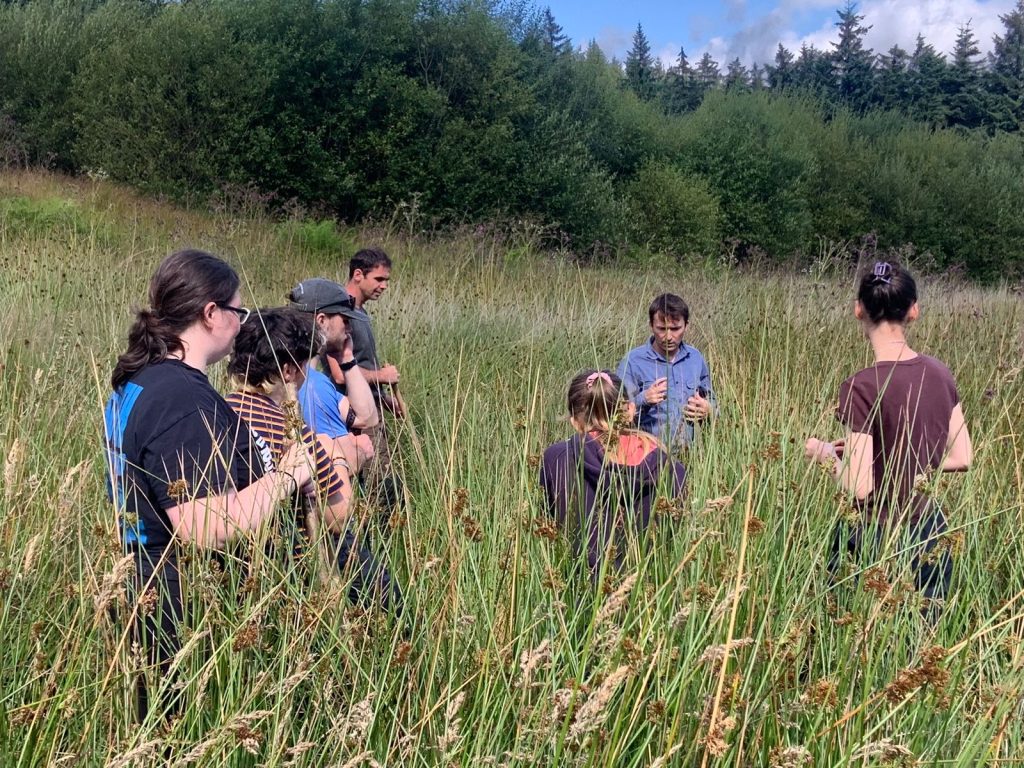
INCC staff demonstrating upland Water Vole survey techniques to volunteers

Unfortunately they also found evidence of American Mink spreading into the upland habitats and this has led to INCC and partners establishing the South Wales American Mink Partnership (SWAMP). This group includes Neath Port Talbot County Council, National Resources Wales, The Wildlife Trust of South and West Wales, Bannau Brycheiniog National Park Authority, Gwent Wildlife Trust and the Lost Peatlands Project. More details can be found here (https://www.natureconservation.wales/establishing-the-new-south-wales-american-mink-partnership-swamp/).

The partnership contacted The Waterlife Recovery Trust who have run an innovative American Mink control project in East Anglia (Waterlife Recovery Trust – Saving our native wildlife from the introduced American Mink).

Farmland restoration in Ceredigion

Since 2020 INCC has been undertaking surveys and assessments to help inform management decisions for wildlife at a farm located in Ceredigion, on the western side of the Teifi Valley. The site is an 84.6ha area of land that was, until relatively recently, mostly managed by sheep grazing and cutting for silage. The early stages of INCC’s involvement involved carrying out a full habitat survey of the land and then discussions with the landowner on how to bring his vision of a biodiverse landscape to reality.

Phase 1 habitat map of the site

As well as the more intensively managed land, the site includes areas of SSSI which house both Water Voles and Marsh Fritillaries. In the 5 years since INCC has been involved, the landowner has enthusiastically thrown himself into the work required to make the land as good for wildlife as possible.

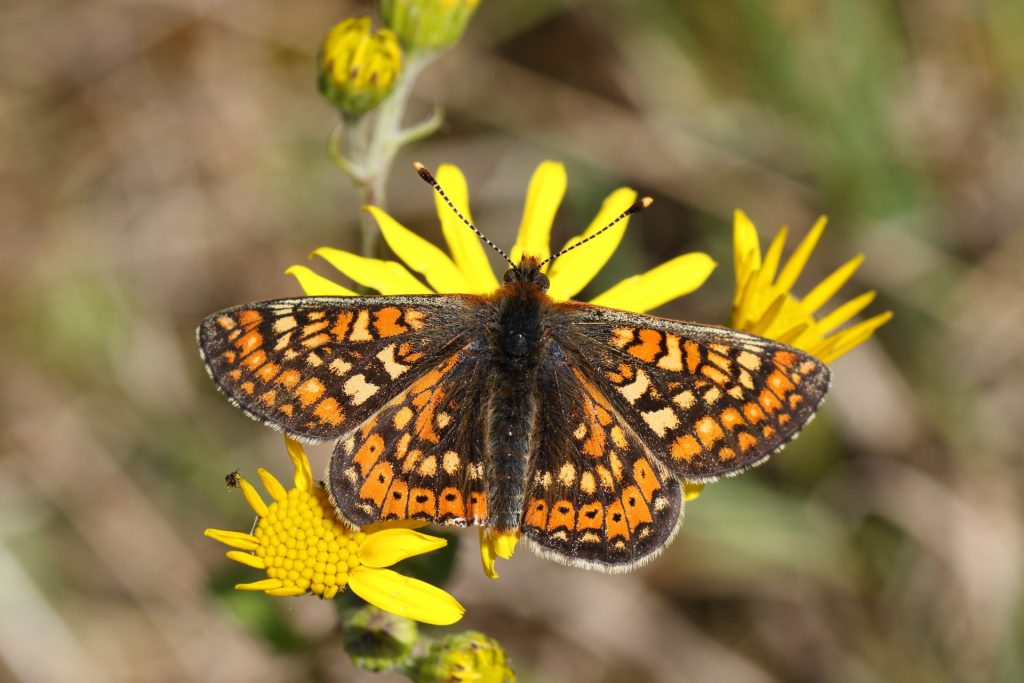
Marsh Fritillary seen at the site in 2023

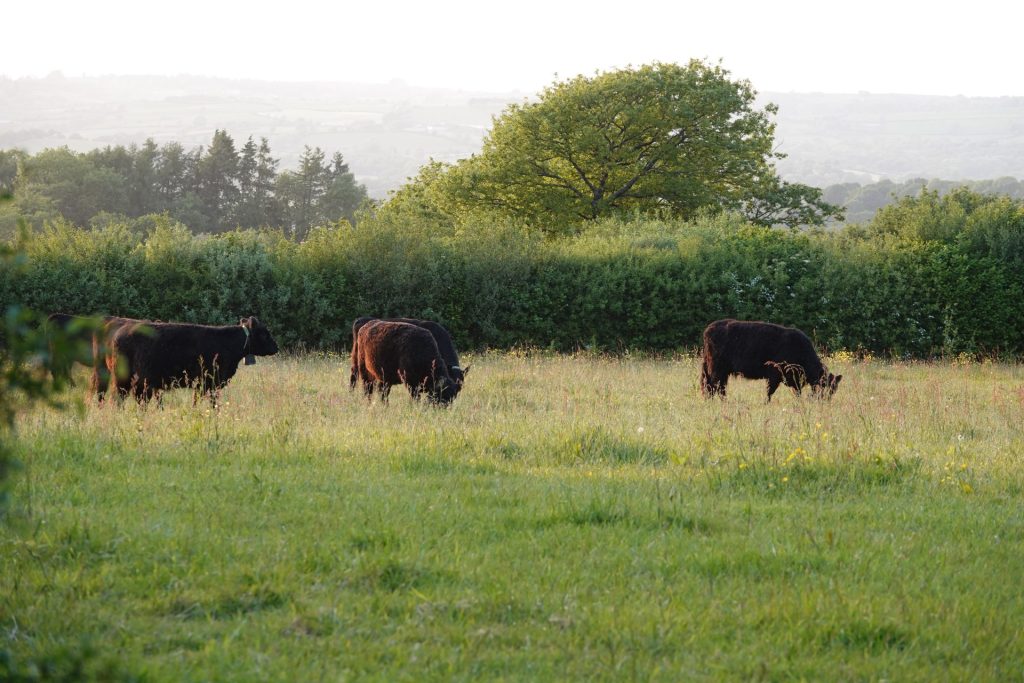
One of the first jobs was to replace the sheep with native breed cattle, much better for managing land with nature conservation in mind. The landowner quickly brought in a herd of Galloway cattle, and they have already made a big difference, in marshy grassland areas in particular (where sheep wouldn’t go). The cattle have been equipped with NoFence collars which allow them to be directed to different areas on the farm, depending on the time of year.

One of the Galloways with a NoFence collar

As well as cattle, two free-range Tamworth pigs have been brought in; their activity mimics that of the native Wild Boars that would have been present in the past. Their digging creates bare areas of soil for plants to germinate as well as small pools that benefit aquatic invertebrates and breeding amphibians.

The aim for the agriculturally improved fields is to bring back the floral diversity, this is being done via mechanical cutting and baling to reduce nutrients over time, and therefore the dominance of Rye-grass. Sowing of Yellow-rattle seeds will also help weaken the grasses, leading to a more species-rich and wildlife friendly sward. Students from Bridgend College spent a weekend at the site in 2023, 2024 and 2025 and carried out vegetation monitoring in some of these fields to allow their progress to continually be assessed.

Bridgend College students carrying out botanical surveys

As well as the surrounding land, the farm has numerous outbuildings which are home to nesting Barn Owls, Redstarts, Swallows, House Martins and House Sparrows as well as Pipistrelle bats.

Left: male Redstart nesting in one of the outbuildings

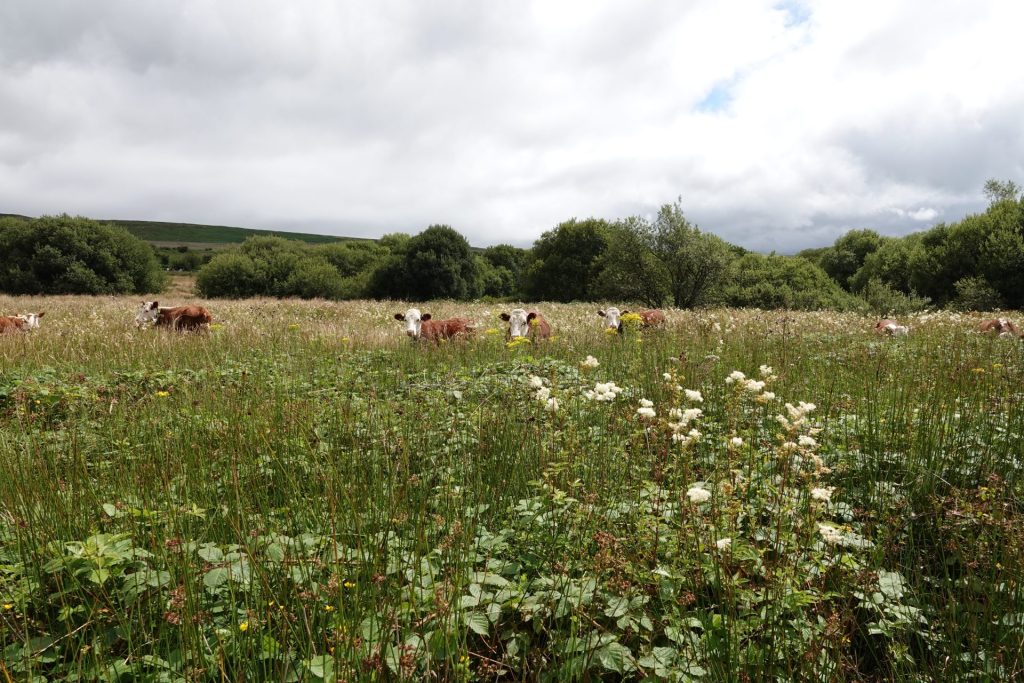
The marshy grassland areas are used by Otters, amphibians, and aquatic invertebrates as well as the Water Voles; these have also benefitted from the creation of a network of pools and scrapes (see right). Water Voles have rapidly colonised these, as have Palmate Newts, and Frogs.

Above: Otters using the marshy grassland

Excitingly, 2025 saw the culmination of years of planning and licence applications as two Beavers Castor fiber were released into their large enclosure, specially fenced off in readiness. At the time of writing they have been there for 6 months and have been extremely busy widening and blocking ditches, creating new ponds and building a lodge, making the habitat even more suitable for themselves as well as for many other taxa. Fingers crossed that this activity can be seen in the wild again in Wales soon.

Above: A Beaver adding freshly cut branches to a dam

INCC will be involved in coming years to monitor how the habitat management is benefitting the site, as well as overseeing more habitat changes such as selective tree planting, planting wildflower plugs, and creating more scrapes. Surveys for lots of different taxa will also be carried out, particularly for Marsh Fritillary, Water Vole, Harvest Mouse, and breeding birds. Thanks to the landowner for their passion and vision and for involving us in such an inspiring project.

Llwyndewi, INCC’s first nature reserve!

In 2023 INCC took on management of a large area of land owned by Brecon Carreg, the mineral water company. It is an amazing site overlooking Carreg Cennen Castle and has huge potential.

Covering 65ha, the land around Brecon Carreg’s factory near Trapp is now known as Llwyndewi after the farm that was originally present. It consists of a wonderful mix of meadows, woodland, marshy grassland, upland acid grassland and of course the River Loughor. Known as Llygad Llwchwr, the river emerges from underground caves and flows through the reserve and eventually meets the sea near Llanelli.

Above: the river running through the nature reserve

Left: inside the source of the River Loughor (photo (c) Mark Burkey)

INCC’s initial work was to walk the site (no easy task!) and map the habitats present, thinking how the diversity could be improved through the introduction of sympathetic management.

A Phase 1 habitat map of the site showing its amazing diversity
One of the hay meadows on site

We also started doing some baseline ecological surveys, revealing the wonderful wildlife already present including Otters, Badgers, Cuckoos, Ravens, and dragonflies and damselflies. These surveys will continue over coming years to assess how well the habitat management techniques are working. In addition to surveys we have also installed a number of Dormouse boxes, as well as a Barn Owl box.

Volunteers installing dormouse boxes

Above: Badgers and Otters are just two of the species we have seen on cameras at the site so far

With the help of a local arborist we have put up a number of bat boxes and bird boxes. We will monitor these in coming years. Some of the woodland looked ideal for Pied Flycatchers Ficedula hypoleuca and in 2025 two pairs took up residence in the boxes!

Some of the marshy grassland on site needs managing to improve its potential for wildlife.Up until now it wasn’t managed at all so the grasses have become overgrown and rank, limiting the diversity of flowering plants. It is potentially an important site for Marsh Fritillaries and could act as a stepping stone to link the populations around Trapp with those in the Amman Valley. We have been working with local fencers and graziers and managed to introduce some hardy cattle onto the site in 2025. Cattle are one of the best habitat managers you can find, and they will ensure that the grassland is opened up which will improve the site’s biodiversity.

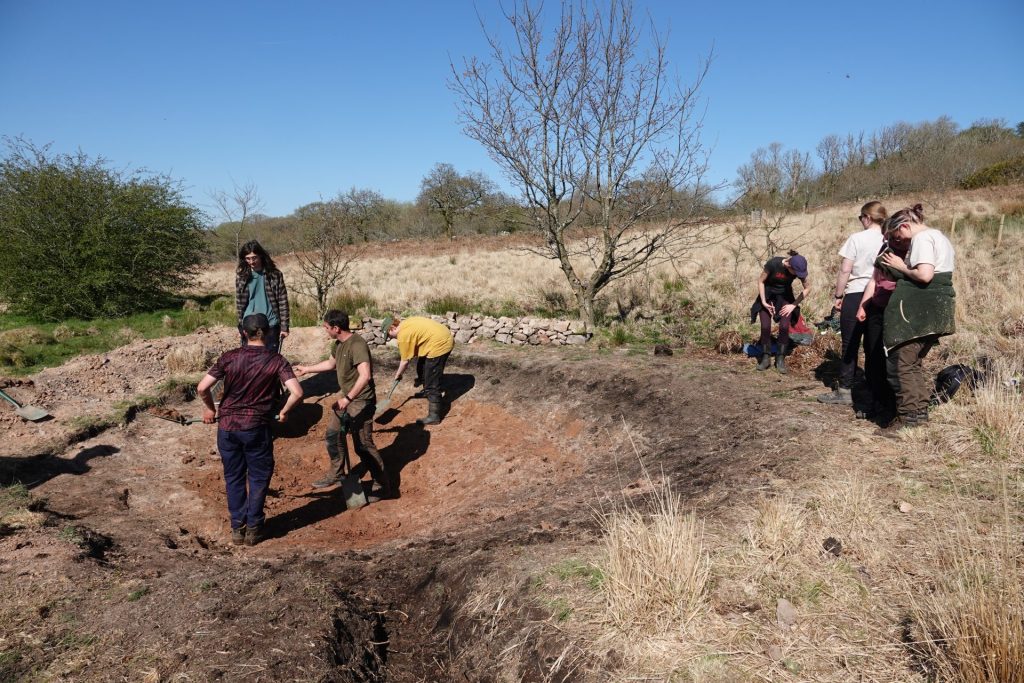
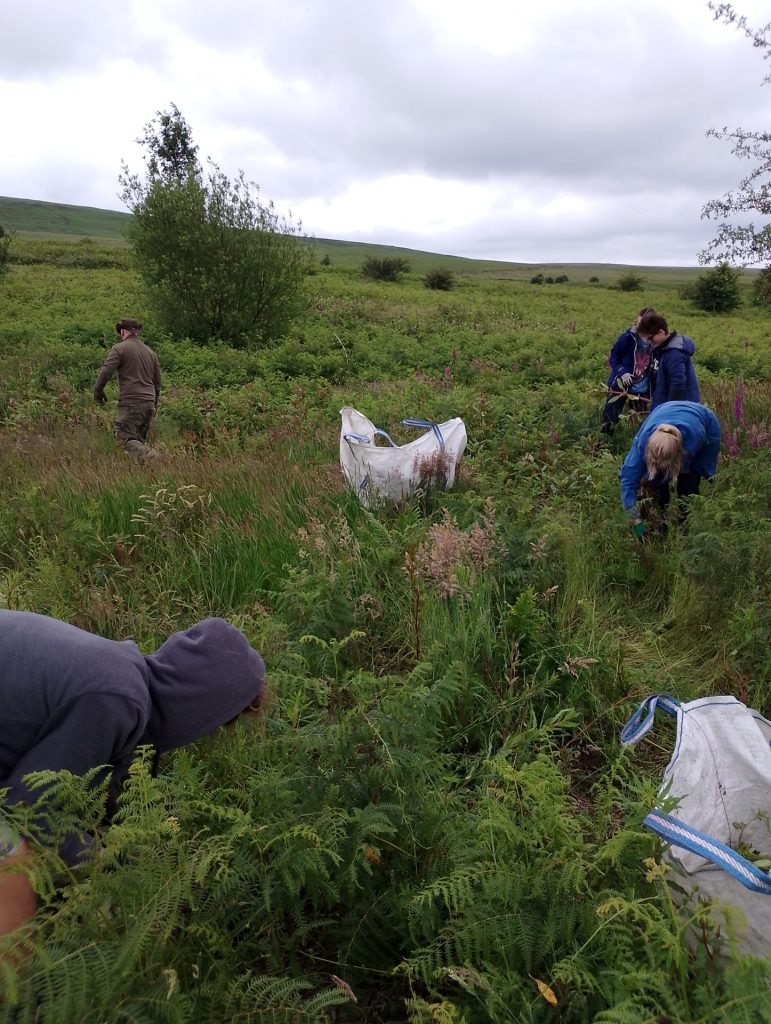
In 2025 we were lucky enough to host students from Bridgend College at the nature reserve. They worked hard to create a brand new pond, as well as carrying out some ‘Bracken bashing’ – this is a way of thinning dense Bracken in areas where it is starting to shade out sensitive habitats such as acid grassland.

Above: Roe Deer visiting the new pond soon after completion.

Students also joined local volunteers to start clearing the site of the highly invasive Himalayan Balsam Impatiens glandulifera. This plant is very damaging to biodiversity, shading out native vegetation and weakening riverbanks. A huge amount of clearance has already been done and monitoring and control will continue annually. A lot of the work in 2025 was carried out by Liv and Matt, two students who INCC employed over the summer period to give them their first steps to a career in conservation.

We have begun running some guided walks on site to show people just how wonderful the site is and to demonstrate the effectiveness of the various management techniques that are being undertaken. Thanks to Brecon Carreg for their enthusiasm for the project and willingness to go ahead with converting it into a wonderful nature reserve.

Farmland restoration in the Vale of Glamorgan

In 2023 INCC were approached by new landowners in the Vale of Glamorgan who had just purchased a 77ha farm. Until relatively recently, it was a mixed sheep and cattle farm comprising of agriculturally improved grazed pasture and sileage fields along with small areas of deciduous woodland and dense hedgerows.

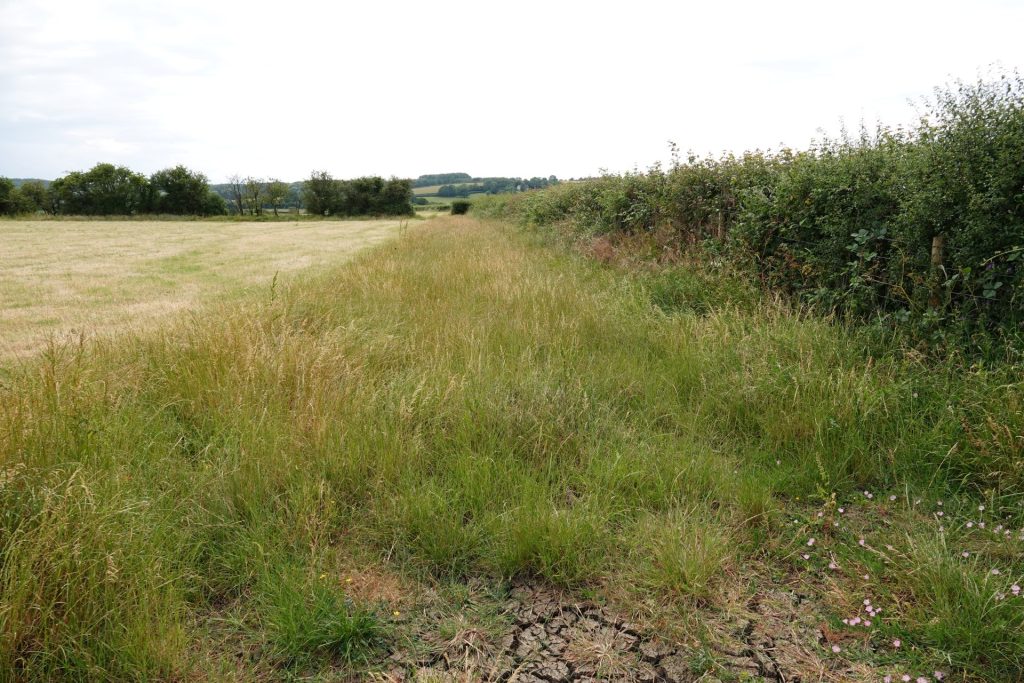
Grassy margin around arable field

The landowners are passionate about wildlife and asked INCC to carry out a habitat survey of the site and to recommend how best to improve the site to maximise its biodiversity, whilst ensuring it remains a viable farm business.

Habitat surveys in 2023

Not long before the new owners bought the property, some of the fields were converted to arable crops. These have been intensively managed, but the land still supports characteristic species including Brown Hare and Yellowhammer.

Brown Hare in one of the farm’s arable fields

Previously the land has been intensively managed right up to the hedgerows, leaving little space for biodiversity apart from within the hedgerows themselves. Some of the management changes INCC recommended involved creating wide ‘buffer strips’ around the edges of the arable fields which would provide a refuge for Hares and other species, as well as food source for insects when the floral diversity starts to increase, potentially boosted by planting of native species. These insects will then help feed the farmland birds such as Skylarks, Meadow Pipits and the Yellowhammers. As of 2025, 6m buffer strips have been established around the borders of all the arable fields and have been used by flocks of finches exploiting the extra food source.

Yellowhammer in a dense hedgerow at the farm

A general reduction or elimination of chemical inputs has also been recommended, but particularly along hedgerows and watercourses. While the majority of the land is to be maintained as farmland, albeit managed primarily with wildlife in mind, INCC also recommended some options specifically for wildlife. Firstly, sympathetic tree planting; a carefully selected mix of native species was chosen, appropriate to the area and soil types. The trees have been planted in locations that are currently of low biodiversity value and in places that will improve the habitat connectivity across the site.

A variety of native species awaiting planting
Bridgend College students helping plant the trees

Later in 2025 ponds will be dug on site which will greatly benefit amphibians and aquatic invertebrates as well as other taxa; ponds being one of the best ways of boosting biodiversity.

We are looking forward to working with the landowners in the years to come to monitor how the management changes are going and how the biodiversity is responding. Thanks to the owners for their passion and enthusiasm for the project, it’s an inspiring one to be a part of.

Amman Valley: Community Wildlife Garden

INCC and volunteers have transformed a piece of land in the Amman Valley into a wildlife garden, now thriving with wildlife and open to visitors.

In early 2022 INCC took over responsibility for an area of land next to the bowls pavilion in Garnant, with the idea of creating a wildlife garden for use by local people as well as to help with some of INCC’s flagship conservation projects.

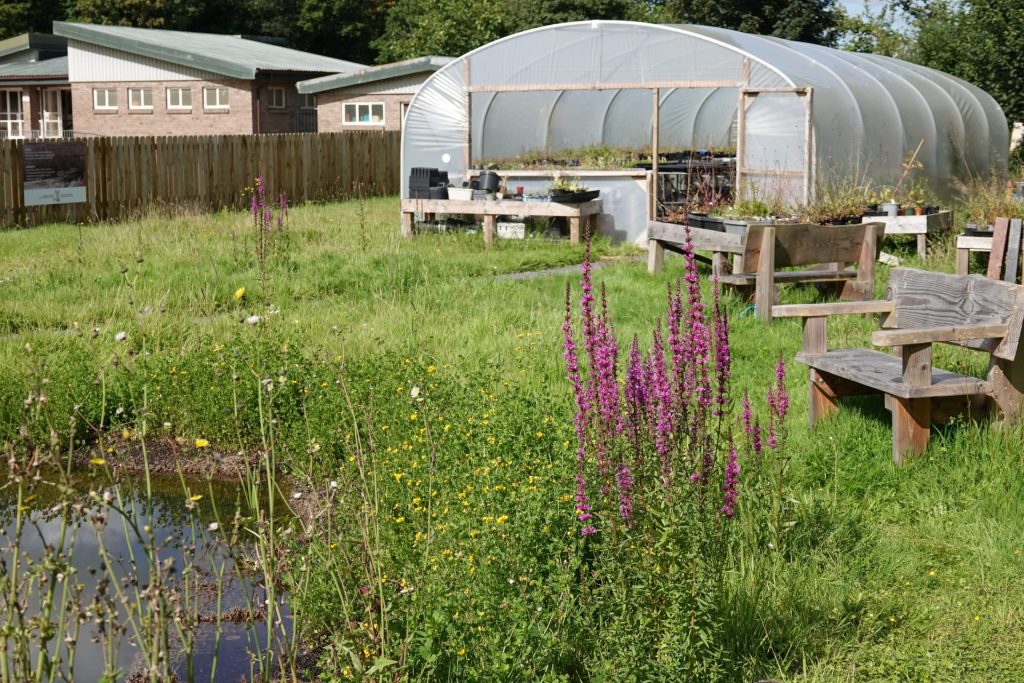
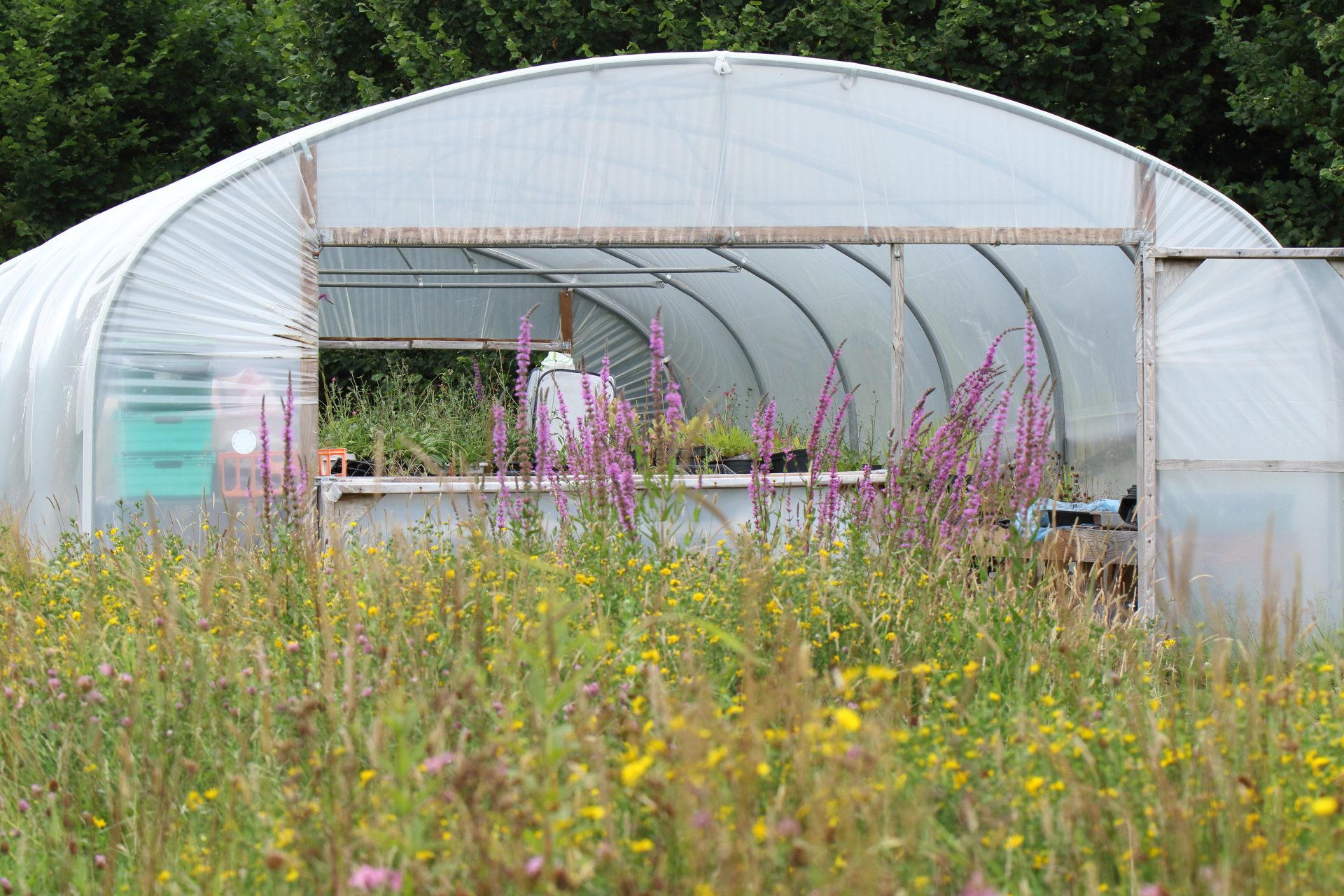
One of the key aims of the project was to install a polytunnel that would allow INCC staff and volunteers to grow Devil’s-bit Scabious plants for the Marsh Fritillary project (link). Scabious and other wildflowers are also grown to help habitat restoration projects in the Valley and elsewhere (link).

Polytunnel construction in February 2022
Volunteers tending wildflower seedlings

One of the best ways of improving an area for wildlife is to dig a pond, however small. The garden was big enough to allow a good size pond which was dug in the spring and rapidly filled up naturally. The pond has a range of depths and was colonised quickly by Palmate Newts (Lissotriton helveticus) and diving beetles.

Digging the pond in March 2023
Wildflowers starting to thrive in May 2023

Once wildflowers had begun to flourish in summer the pond looked very natural and was very popular with dragonflies and damselflies. In 2025, thanks to a Pobl grant, a second, much smaller, pond was dug and was rapidly colonised by newts and pond invertebrates.

The areas of grass are now being managed as a hay meadow, and initially there was relatively little biodiversity in the grassland (apart from a very welcome orchid!) so we have given it a helping hand. Thanks to support from LocalGiving, volunteers have been hard at work planting an array of native wildflowers and shrubs that will provide food for invertebrates throughout the year. We have created boggy areas, patches of long grass, small areas of dense scrub for nesting birds as well as a small woodland. These diverse habitats should ensure that the garden attracts as much wildlife as possible.

Volunteers planting out native wildflowers

The garden and polytunnel is also a hub to engage with the local community and get people involved in local nature conservation. We have hosted local groups and schoolchildren building hedgehog boxes and sowing wildflowers amongst other things.

We have also been running wildlife themed events, including moth trapping, bat walks and habitat management days. We will also be opening the garden on set days over the summer for people to come and get involved in some of our work, or just to sit and relax and enjoy the garden. Please do come along!

Members of the public being shown some of the Marsh Fritillary caterpillars from INCC’s population reinforcement project

Yellowhammer Conservation in the Vale of Glamorgan

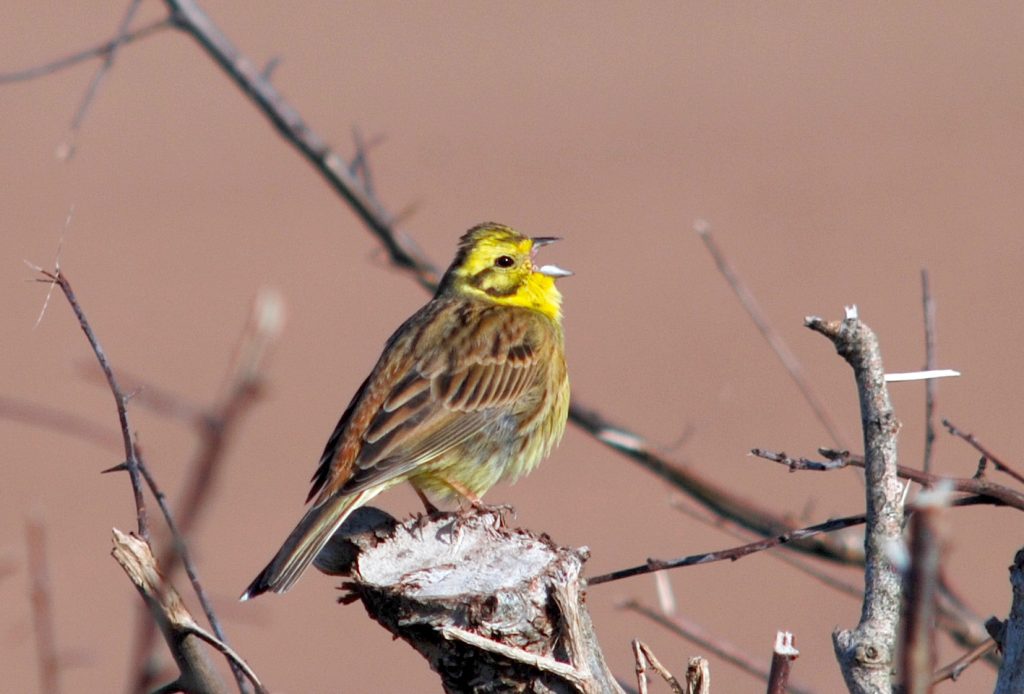
Yellowhammer. Clive Hurford

INCC is aiming to increase the fortunes of one of Wales’ rarest and most colourful farmland birds – the Yellowhammer (Emberiza citrinella). The project will see landowners and conservationists working together for Yellowhammers and other wildlife at a mixed farm in the Vale of Glamorgan.

To help Yellowhammers and other farmland wildlife at the farm, the project will plant 10,000 square metres of energy rich wild bird cover crop, spread over different areas of the farm. The sacrificial cover crop won’t be harvested alongside the main cereal crops at the farm. Thanks to support from the Welsh Ornithological Society (WOS), we have already raised £700 toward the project costs. We are now looking to raise a further £2,000.

Please Donate

Yellowhammer Project


Category:

The cover crop will provide ideal conditions for ground nesting birds in spring and summer, and millions of energy rich seeds for farmland birds over winter. When flowering, the un-sprayed cover crop will provide habitat for several invertebrates, which in turn will provide food for chicks.

Species especially threatened by the loss of arable land are that of seed-dependent farmland birds, such as the once common Yellowhammer (Emberiza citrinella) and Grey Partridge (Perdix perdix), which have already disappeared from most of the Welsh countryside. The decrease in annual arable plants and wildflower rich crop margins has led to the loss of nesting sites, insect food for chicks and seeds to support them through the cold winter months.

In addition to the cover crop, 6-8m wide wildflower rich field margins will be created around all the arable fields at the farm. This will equate to several hectares of wildflower meadow which will provide even more habitat for farmland wildlife.

Unsprayed Arable margins. Clive Hurford
Arable wildflowers created by unsprayed cultivated margins. Pic Clive Hurford

Rhion Pritchard – Welsh Ornithological Society Trustee, said: “The Yellowhammer, once a familiar sight in Wales, is in trouble. Results from the BTO’s Breeding Bird Survey show that its numbers have declined by 79% in Wales since 1995, the second-greatest decline of any bird species. The Welsh Ornithological Society is therefore delighted to be able to support a project aimed at boosting Yellowhammer numbers in the Vale of Glamorgan. We’ve visited the farm in question and it’s obvious that it has tremendous potential. We’re confident that this project will make a real difference to Yellowhammers and other seed-eating species in this area and urge everyone to support this exciting INCC venture”.

Saving the Marsh Fritillary in South Wales

Please donate to help prevent the local extinction of one of the UK’s most threatened and iconic species – the Marsh Fritillary butterfly (Euphydryas aurinia).

The butterfly has undergone catastrophic declines throughout much Europe and the UK in recent decades. Although Wales remains a relative stronghold, even here many localised extinctions have taken place.

“If we are to truly reverse the decline of nature in Wales it is clear that we need additional approaches to nature conservation. It’s great to see such positive action for the iconic Marsh Fritillary butterfly and to think that although this might be the first project of its kind in Wales, it won’t be the last”

Iolo Williams: TV Broadcaster and Naturalist

After years of preparation and planning, INCC received a licence in late 2020 to collect 80 caterpillars from the wild to start a captive breeding and rearing programme. In spring 2021, INCC, along with project partners collected 80 Marsh Fritillary caterpillars with the aim of restoring a dwindling population in the Upper Ely landscape of South Wales.

Once collected, the caterpillars were moved to rearing pens situated at the National Botanic Garden of Wales and allowed to pupate. The emerging adult butterflies bred and laid eggs in the Devil’s-bit Scabious provided for them – the main foodplant of the caterpillars. In September 2021, the first of batch of caterpillars were put out onto Llantrisant Common, the first of thousands planned to be released into the landscape over the next few years to help boost the population.

The first Marsh Fritillaries released onto Llantrisant Common in 2021
Marsh Fritillaries seen through thermal scope in spring 2022

In 2022 we were delighted to find that the caterpillars had successfully survived hibernation and proceeded to pupate and hatch. On the 11th of May 2022 we saw the first Marsh Fritillary flying on the Common since the mid-1990s!

During the flying season in May and June, hundreds of Marsh Fritillary butterflies were seen across the common. Local school children and volunteers who have helped the project at every stage were able to see all their hard work up close. The local school, Ysgol Gymraeg Castellau have been crucial to the project and have encouraged pupils to take an active part in the survey and monitoring of the Marsh Fritillary locally. Hopefully, many of the children will grow up to be the Marsh Fritillary champions of the future.

Later in the year a survey of the Common found 193 larval webs – a great result for the first year. In the years since we have released more caterpillars on to the Common while starting to bring other marshy grassland habitat in the landscape into good condition.

The project is scheduled to continue for another year: continued releases to support the fledgling population, along with monitoring of the Common and the surrounding landscape in the hope that the butterflies flourish and disperse to other patches of suitable habitat.

The project would not have been the success it has been so far without help from volunteers, project partners, funders and many others – thank you for your continued support.

Support the project

Why the Marsh Fritillary Butterfly

Conservation for Marsh Fritillaries in Wales has for many years focused on monitoring populations and trying to influence policy to better manage existing habitats. Despite the tireless work of volunteers, conservation organisations and many landowners, the Marsh Fritillary continues to decline. It is becoming increasingly apparent that greater conservation effort is needed if we are to protect the species from further localised extinctions in Wales.

Marsh Fritillary Caterpillars in Larval Web

Due to national and international declines, Marsh Fritillaries are included on Annex II of EEC/EU Habitat and Species Directive. A total of ten Special Areas of Conservation (SACs) have been designated in Wales, where the Marsh Fritillary is a primary reason for site selection. The species is also listed as ‘a living organism of principal importance for the purpose of maintaining and enhancing biodiversity in relation to Wales’ (Environment (Wales) Act 2016).

The decline of the species is associated with the loss of its marshy grassland and rhôs pasture habitat. When managed appropriately these habitats provide the ideal sward structure required by the caterpillars and their food plant. The loss of grassland habitats, predominantly through agricultural intensification, has resulted in fragmented landscapes which support fewer and fewer areas suitable for the species.

Cattle grazing is the best way to manage Marsh Fritillary habitat.

Project Location
The population restoration project is taking place in South Wales, within the Upper Ely landscape encompassing the towns of Llantrisant and Tonyrefail. Despite its UK significance the Upper Ely Marsh Fritillary population is declining and has been in steady, continuous decline for at least 25 years.

A key area for the butterfly is Llantrisant Common, situated to the south of the landscape and covering an area of over 113 ha of contiguous rhôs pasture habitat. A combination of historic and current extensive cattle grazing has created the ideal habitat for Marsh Fritillaries with an abundance of Devil’s-bit Scabious and other wetland vegetation. Despite this, the butterfly has not been seen on the Common in over 20 years.

Amman Valley: Overview

Tair Carn overlooking the Amman Valley. Photo Rob Parry

INCC has been working with partner organisations and communities of the Amman Valley to bring about a greater awareness of the wildlife people share their valley with.

The work has already highlighted the importance of the valley for wildlife, and just how committed local people are about wildlife and nature conservation.

Wildflower meadow at Hen Bethel

The Amman Valley is an area where the impact of industry has been painfully felt by nature in the past. However, the Amman Valley also represents a place where human action has helped shape the landscape and the habitats and wildlife we see today.

Thanks to the valley’s industrial past, much of the land has been less intensively farmed. Local people practiced only small-scale, non-intensive farming to help supplement their incomes. This has meant that today there is a diverse mosaic of different habitats and wildlife to be found. Small areas of habitat scattered throughout the valley and the villages combine to create a large ecological network. This network of habitats supports some of Wales’ most iconic and threatened wildlife.

Nature is a constant source of inspiration, contributing to our physical and mental health and wellbeing. The more resilient our ecosystems are for wildlife, the greater the benefits for people.

Nant Pedol. A tributary of the Afon Amman

Wildlife surveys and community nature conservation activities helped to demonstrate the vital role communities can play in bringing about the positive changes needed to halt and reverse the decline in biodiversity, locally and across Wales.

INCC believes that the community’s dedication to nature conservation coupled with valley’s importance for wildlife warrants special recognition in the form of a Landscape of Importance for Nature Conservation (LINC). All ongoing and future nature conservation work in the area will be under the LINC initiative.

INCC has been able to work closely with a number of local landowners, community groups and volunteers in the valley to deliver a number of targeted nature conservation projects throughout the landscape.

You can download many of our newsletters below

Amman Valley: Wildlife Surveys

Despite the Amman Valley supporting some nationally scarce species, relatively little biodiversity information is known about the area.

INCC has always been keen to highlight the importance of the Amman Valley for biodiversity. The best way of doing that is to undertake ecological surveys. Identifying the presence and distribution of particular species enables INCC, to deliver better targeted conservation projects.

Recording particular species means that those species and their habitats will be afforded greater protection through the planning system. This will be achieved via the creation of Sites of Importance for Nature Conservation (SINCs).

Local volunteers from the community have been able to play a leading role in the ecological surveys. Surveys and training days for volunteers have already been organised for Dormouse, bats and Marsh Fritillary.

Community volunteers undertaking a Dormouse survey in the Amman Valley

Thanks to support from the Brecon Beacons National Park, ecological surveys will continue throughout the valley for the next few years. This will add to our local and national understanding of many species and their habitats.

One of the key species that surveys have targeted is Hedgehog (Erinaceus europaeus). Hedgehogs have suffered devastating declines in recent years. It is clear that more needs to be done to prevent Hedgehogs from becoming extinct in Wales over the coming decades.

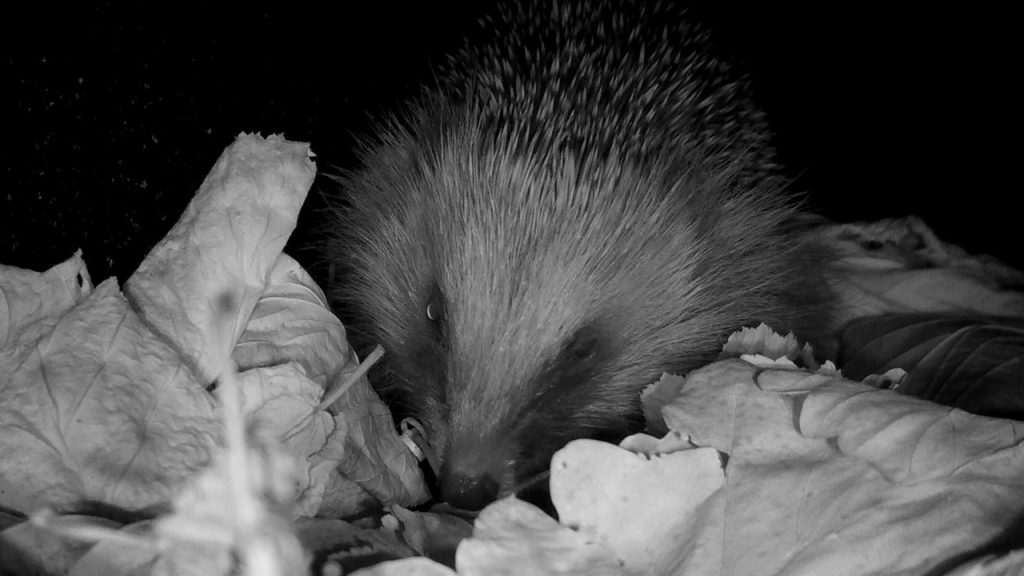
Amman Valley Hedgehog feeding in Hedgehog box

Identifying the distribution of Hedgehogs throughout the Amman Valley will help identify targeted conservation measures. These may include hedgerow creation, garden permeability and artificial foraging provision.

INCC have been testing the design of Hedgehog boxes to help Hedgehogs in the Amman Valley. Underweight Hedgehogs can now be fed in autumn to help them survive the winter months. This also helps increase the breeding population the following year.

A balance must be met as boxes must be accessible for Hedgehogs but inaccessible to domestic cats. With help and support of community volunteers, INCC has made and distributed Hedgehog boxes throughout the community (link). This will help identify the distribution of Hedgehogs and help them survive winter.

It doesn’t always work and some small cats do get in.

Other surveys include Pied Flycatchers (link), wildflowers, and moths.

Moth survey in INCC’s wildlife garden

Amman Valley: Habitat Restoration

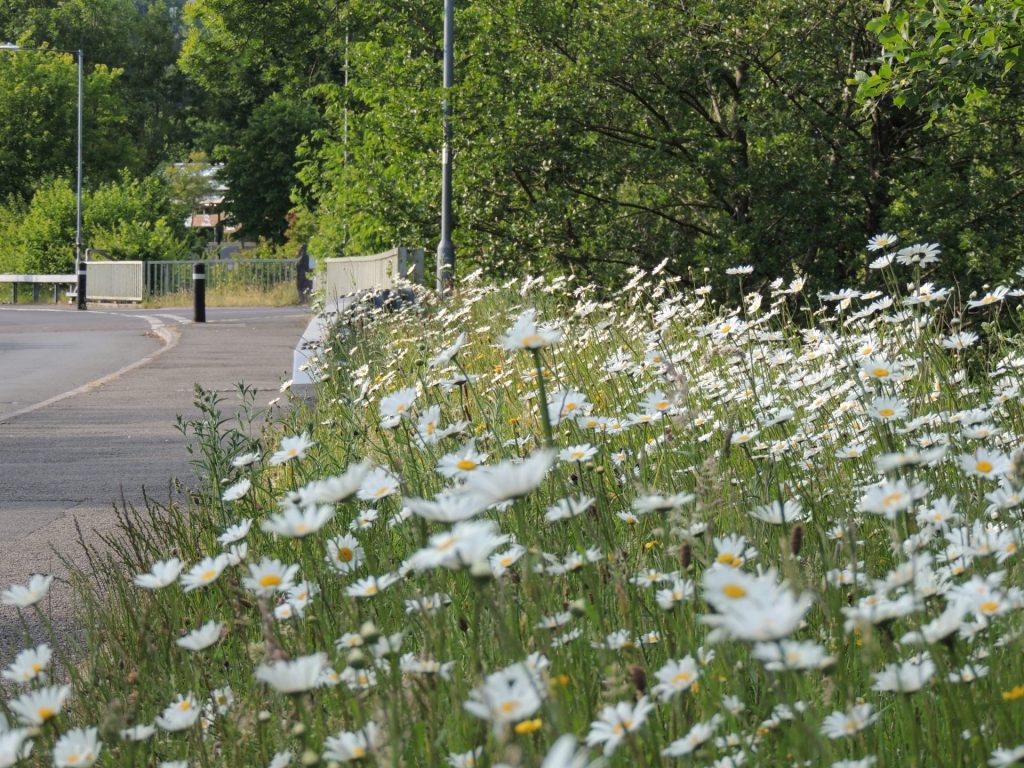
Wildflower roadside verge in the Amman Valley

INCC has been working with partners in the Amman Valley to begin restoring habitats, including marshy grassland and meadows.

A habitat survey of a large part of the Amman Valley was undertaken by Carmarthenshire County Council (CCC) in 2020. The survey mapped the habitats in the landscape that are of particular importance for biodiversity. In total, 324 individual habitat compartments of semi-natural habitat types were recorded, covering over 950ha of habitat.

Habitat map of part of the Amman Valley

The largest combined habitat in terms of area was woodland, including hedgerows. Woodland habitat of different ages and ecological quality can be found throughout the landscape. Larger woodland blocks associated with the Afon Amman and its tributaries.

One of the valley’s most important wildlife habitats is marshy grassland, which is widely distributed throughout the landscape. The marshy grassland habitat in several areas supports the rare Marsh Fritillary (Euphydryas aurinia) butterfly. The butterfly has undergone catastrophic declines throughout much of Europe and the UK in recent decades. Although Wales remains a relative stronghold, even here many localised extinctions have taken place.

Marsh fritillary basking in the Amman Valley

The decline of the species is associated with the loss of its marshy grassland and rhôs pasture habitat. When managed appropriately, these habitats provide the ideal sward structure required by the caterpillars and their foodplant (Devil’s-bit Scabious (Succisa pratensis)). The loss of species-rich grassland habitats, predominantly through agricultural intensification, has resulted in fragmented landscapes which support fewer and fewer areas suitable for the species.

INCC have been working with local landowners and partner organisations to help restore fragments of marshy grassland habitat in the landscape.

To help with the habitat restoration, INCC have installed a polytunnel in a new community wildlife garden. The polytunnel is dedicated to growing a range of native wildflowers and promoting wildlife gardening.

Community volunteers have grown thousands of Scabious plants, and hundreds more Ragged-robin (Lychnis flos-cuculi), Marsh Ragwort (Jacobaea aquatica) and many others.

Community polytunnel full of Devil’s-bit Scabious plants

Our first habitat restoration project in the Amman Valley was the restoration of a beautiful damp meadow at Parc Golwg yr Aman in the heart of the community. For many years the meadow was cut at regular intervals throughout the year as an amenity grassland. Working closely with Cwmaman Town Council who manage the park, we were able to convince them to stop mowing during the growing season. Today, the damp meadow is one of the most floristically diverse grasslands in the Valley.

In spring 2021, INCC alongside local volunteers, Cwmaman Town Council and the National Botanic Garden of Wales planted out many of these plug plants. The plants are helping to restore the floristic diversity of the marshy grassland at Parc Golwg yr Aman in the Amman Valley, as well as in INCC’s wildlife garden.

Parc Golwg yr Aman in 2023

Thanks to support from Bannau Brycheiniog National Park, other habitat restoration work in the Valley has included getting cattle grazing on to overgrown marshy grassland sites. Native breed cattle are one of the best ways of managing habitats for wildlife. This work has involved local contractors improving fencing and installing holding pens and water troughs.

Cattle grazing marshy grassland in the Amman Valley

Restoration of wildflower meadows has also begun, with seed collected locally and sourced from the Botanic Garden being spread on more agriculturally improved meadows.

Harvesting wildflower seeds in the Amman Valley

In addition to grassland habitats, INCC has also planted an orchard of local fruit tree varieties and we have created hundreds of metres of hedgerow.